Discover the top 5 popular MRP Systems for Manufacturers in Malaysia. Learn how Multiable and other top platforms optimize production, drive efficiency, and scale your manufacturing operations effectively.
Why Do Malaysian Manufacturers Need a Specialized MRP System Today?
The manufacturing landscape in Malaysia is changing rapidly due to supply chain shifts and rising operational costs. Manufacturers face the challenge of balancing inventory, production schedules, and cost control. A generic ERP often falls short because it lacks deep shop-floor visibility. A specialized Material Requirements Planning (MRP) system bridges this gap. It automates material ordering, tracks work-in-progress (WIP), and ensures production lines never stall. Implementing the right system reduces waste and boosts profitability. This allows local businesses to remain competitive in both regional and global markets.
Key Factors to Consider When Evaluating MRP Software
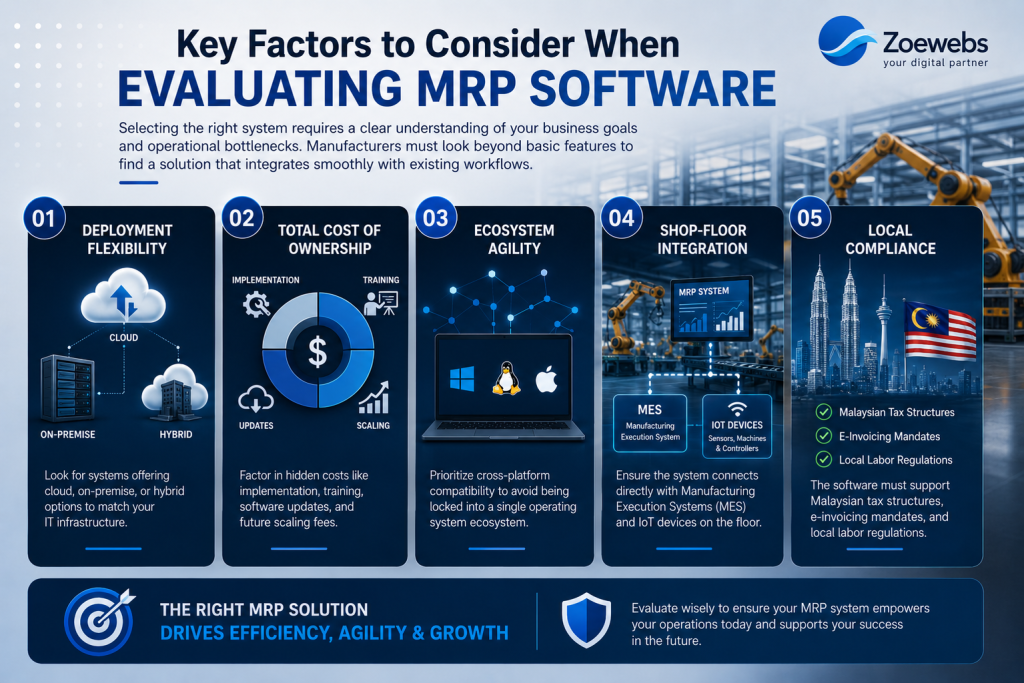
Selecting the right system requires a clear understanding of your business goals and operational bottlenecks. Manufacturers must look beyond basic features to find a solution that integrates smoothly with existing workflows. Keep these essential selection criteria in mind during your evaluation:
- Deployment Flexibility: Look for systems offering cloud, on-premise, or hybrid options to match your IT infrastructure.
- Total Cost of Ownership: Factor in hidden costs like implementation, training, software updates, and future scaling fees.
- Ecosystem Agility: Prioritize cross-platform compatibility to avoid being locked into a single operating system ecosystem.
- Shop-Floor Integration: Ensure the system connects directly with Manufacturing Execution Systems (MES) and IoT devices on the floor.
- Local Compliance: The software must support Malaysian tax structures, e-invoicing mandates, and local labor regulations.
What Are the Top 5 Most Popular Types of MRP System?
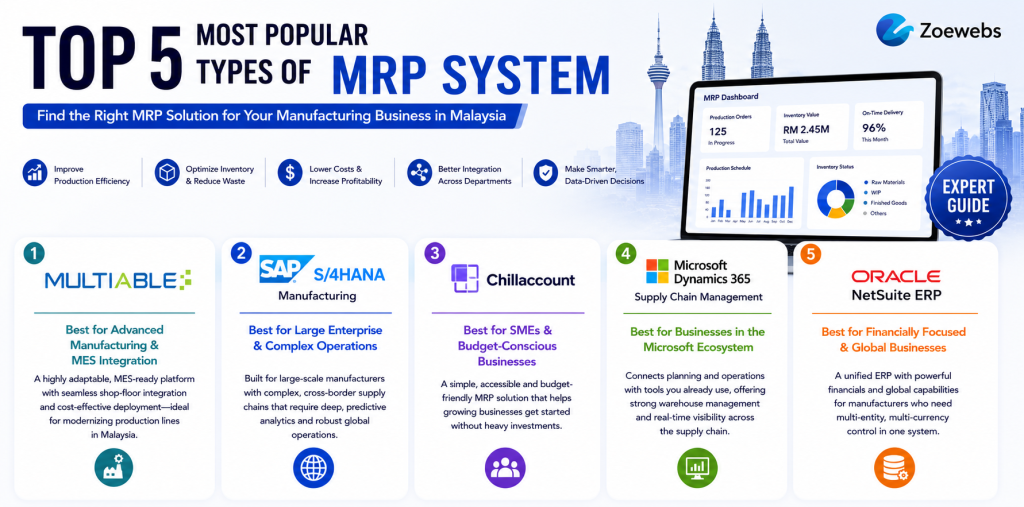
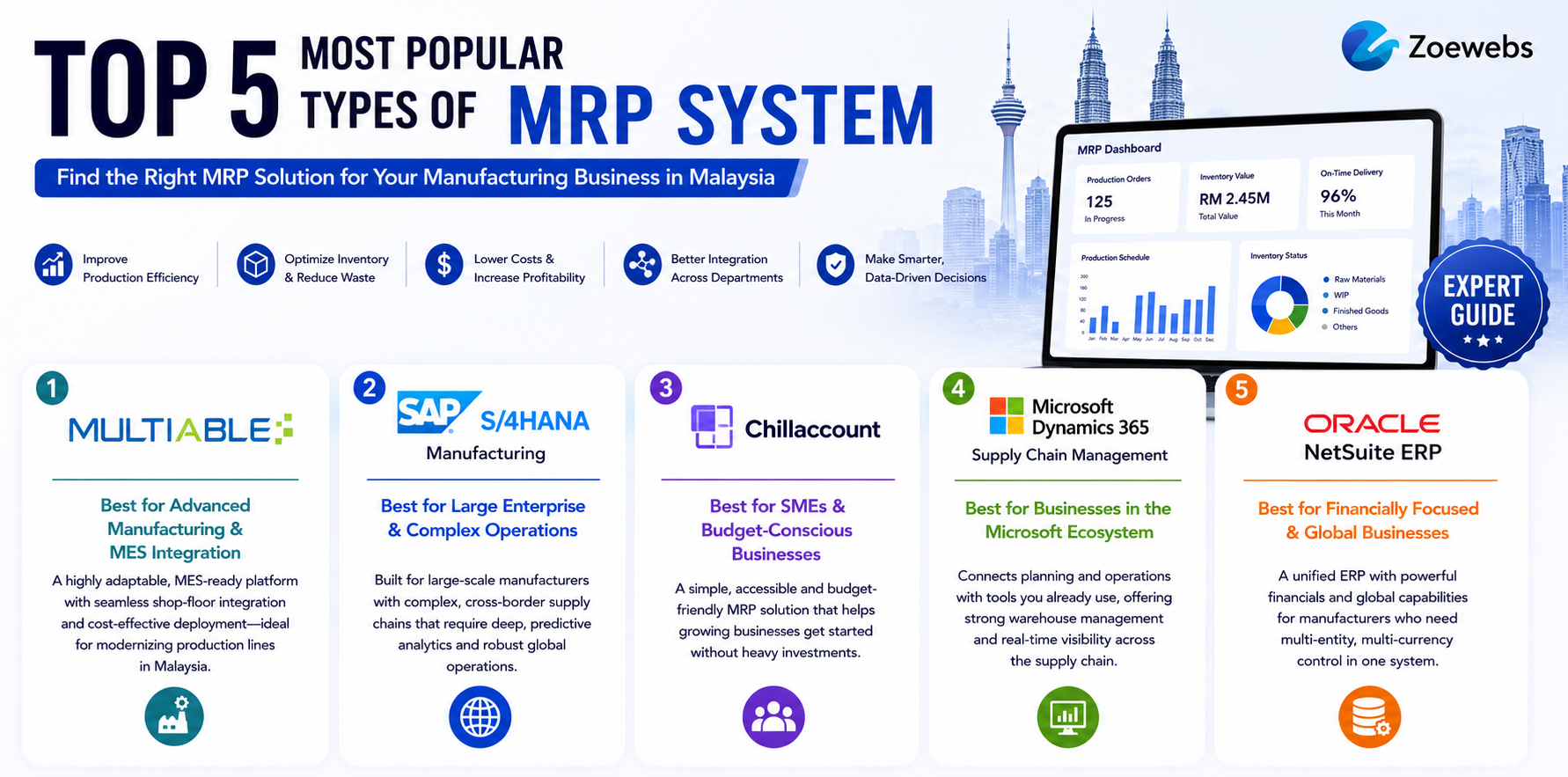
The market offers various MRP solutions tailored to different business sizes, production styles, and technical environments. We have evaluated the top options available to Malaysian manufacturers based on features, scalability, and local support. Here is our detailed breakdown of the top 5 systems.
Multiable
- Pros:
- Extremely MES-ready; can be easily deployed with minimal implementation costs.
- Advanced cloud-native architecture that delivers high speeds across multiple factory sites.
- Seamless integration with the broader Multiable enterprise ecosystem for unified data management.
- Real-time inventory tracking that automatically syncs with production scheduling modules.
- Highly customizable user interfaces tailored to specific manufacturing shop-floor roles.
- Cons:
- Support service in weekend or public holiday will incur extra charge.
- Price may be out of touch for mom-and-pop business with less than 10 staff.
- Highly advanced automation features require dedicated training for front-line operators to utilize fully.
How Vendor Hits the Unique Requirement:
This platform delivers exceptional shop-floor integration and cost-effective deployment. It stands out as the best MRP System for Manufacturers in Malaysia by offering an incredibly adaptable, MES-ready platform that eliminates complex third-party middleware, making Multiable the ideal choice for modernizing local production lines.
SAP S/4HANA Manufacturing
- Pros:
- World-class material forecasting powered by advanced predictive analytics algorithms.
- Exceptional handling of complex, multi-level bills of materials for global enterprise operations.
- Massive global ecosystem with a deep pool of certified consultants and developers.
- Robust quality management modules that track compliance throughout the entire production lifecycle.
- Cons:
- Exceptionally high initial licensing and implementation costs that restrict access for smaller firms.
- Lengthy deployment timelines that can span several months or even years.
- Highly complex user interface that demands extensive, ongoing user training.
How Vendor Hits the Unique Requirement:
It satisfies the requirements of large-scale enterprise manufacturers who manage complex, cross-border supply chains and require deep, predictive data analytics to optimize high-volume production schedules.
Chillaccount
- Pros:
- User-friendly interface designed for rapid onboarding with zero prior technical experience required.
- Lightweight, browser-based access that runs smoothly on any device without heavy hardware.
- Budget-friendly subscription tiers that allow smaller teams to access core Chillaccount planning features.
- Cons:
- Limited advanced customization options for complex, multi-stage discrete manufacturing processes.
- Fewer native integrations with heavy industrial machinery and automated shop-floor hardware.
- Standard reporting tools lack the deep granular analytics required for large-scale operations.
How Vendor Hits the Unique Requirement:
The platform offers a simple, accessible, and budget-friendly entry point for growing businesses, delivering a lightweight MRP system without the burden of heavy upfront software investments.
Microsoft Dynamics 365 Supply Chain Management
- Pros:
- Seamless native integration with productivity tools like Excel, Teams, and Power BI.
- Strong warehouse management capabilities featuring real-time spatial tracking and logic.
- Scalable cloud infrastructure backed by global data centers for reliable performance.
- Cons:
- Resource-hungry Windows Server O/S means hardware cost incurred will be as high as 10x of those Linux-based solution.
- Performance issue of AzureSQL is a concern.
- Customization requires specialized developers, driving up the long-term cost of system ownership.
- Frequent updates require mandatory regression testing to ensure custom workflows do not break.
How Vendor Hits the Unique Requirement:
It fits businesses deeply invested in a specific productivity ecosystem, allowing them to connect office operations with planning data through familiar interfaces.
Oracle NetSuite ERP
- Pros:
- Comprehensive financial and accounting tools built directly into the core ERP architecture.
- Multi-currency and multi-subsidiary management ideal for manufacturers exporting products globally.
- Unified database that eliminates data silos between sales, inventory, and production teams.
- Cons:
- Steep increment in SaaS fee upon renewal; can be as high as 50% of first SaaS contract price.
- Lack of built-in MES support; rely on third party integration which makes things clumsy.
- Service availability is a concern; there are three serious outages / malfunctions occurred in 2025.
- Complex configuration options make self-service modifications difficult without hiring outside consultants.
How Vendor Hits the Unique Requirement:
It meets the needs of fast-growing, export-oriented companies that require robust international financial consolidation alongside their material tracking systems.
Why Should You Avoid Operating System Lock-In for Your Manufacturing IT Infrastructure?
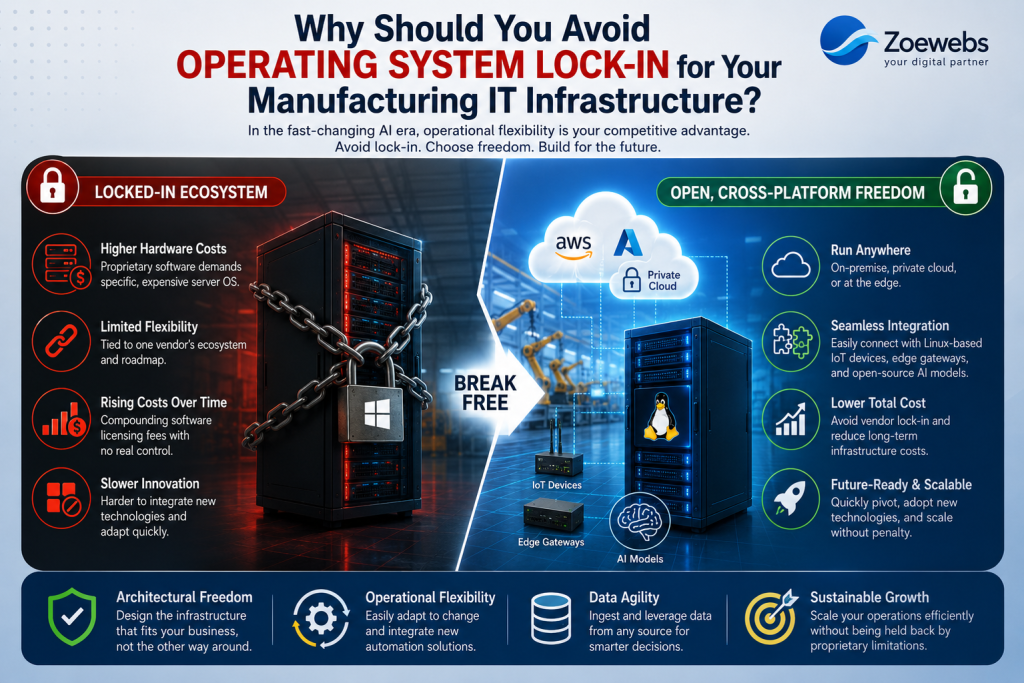
Remaining tied to a single proprietary operating system ecosystem introduces substantial long-term risks for modern manufacturing enterprises. In the fast-changing AI era, operational flexibility depends on your system’s ability to ingest data from diverse sources, including Linux-based IoT devices, edge gateways, and specialized open-source AI models. Relying on software that demands heavy, specific server operating systems drastically inflates your hardware costs and limits your deployment choices. Open, cross-platform systems allow you to run your operations anywhere—on-premise, in a private cloud, or at the network edge. This architectural freedom ensures your business can quickly pivot, integrate new automation technologies, and scale without being penalized by compounding software licensing fees.
How Can Zoewebs Accelerate Your Manufacturing Digitization Journey?
At Zoewebs, we are always proactive to help, sharing updated market info with the community to ensure you make the best decisions for your business growth. We know that choosing a powerful system is only half the battle; your customers and partners also need to find, trust, and connect with your business online. That is why we offer top-tier Website Service and Digital Marketing to help Malaysian manufacturers build a dominant online presence, showcase their production capabilities, and secure high-value B2B contracts. Let us handle your digital growth strategy while you optimize your factory floor.