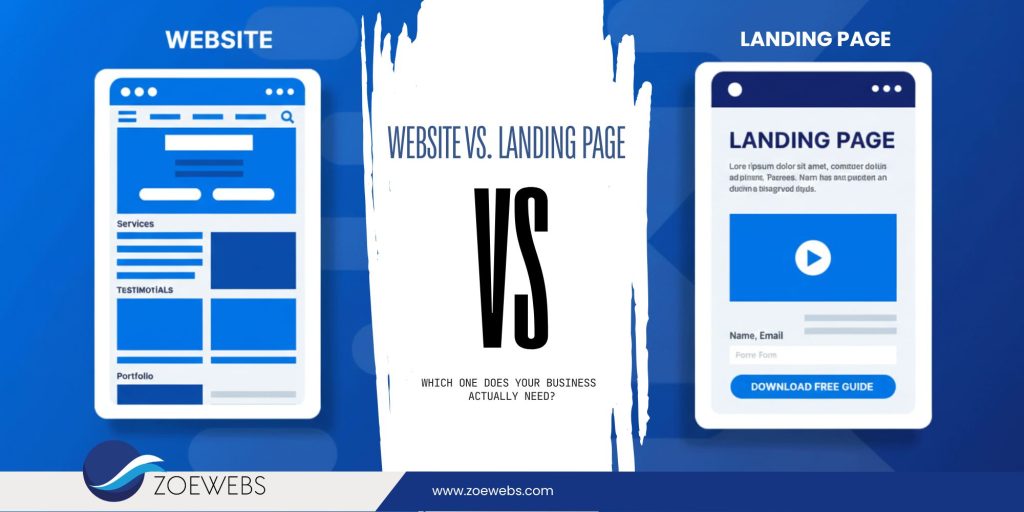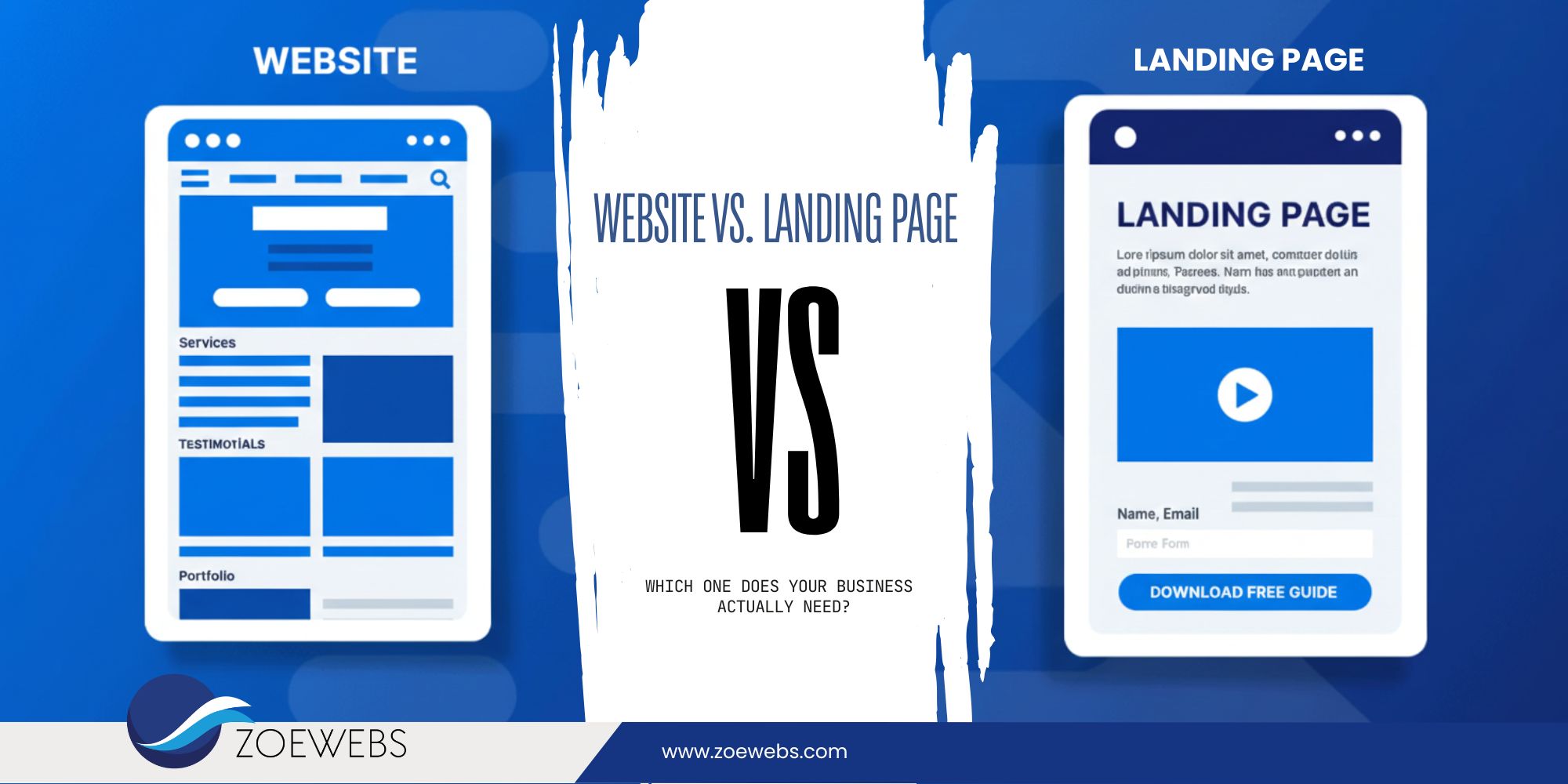
In the world of digital marketing, the terms “website” and “landing page” are often used interchangeably, but they serve two very different masters. Imagine you’re hosting an event: a website is the entire venue—it has a lobby, a snack bar, several stages, and a coat check. A landing page is the VIP room specifically designed for one thing: the main performance.
If you’re wondering where to send your traffic or which one to build first, this guide breaks down the core differences so you can choose the right tool for the job.
The Core Difference: Purpose vs. Focus
The fundamental distinction lies in intent.
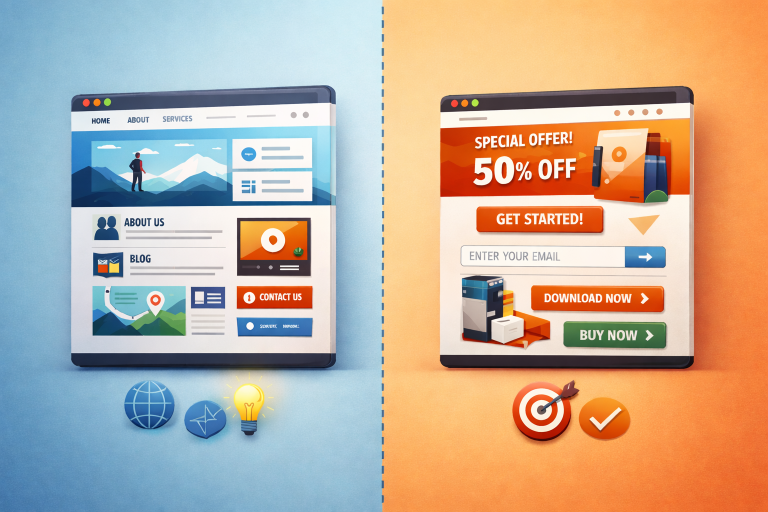
- A Website is your digital headquarters. It’s built for exploration, education, and brand building. It gives a holistic view of who you are, what you do, and how to contact you.
- A Landing Page is a campaign-specific destination. It is built with a singular goal in mind—usually conversion (like signing up for a newsletter, downloading an ebook, or buying a specific product).
Key Differences at a Glance
|
Feature |
Website |
Landing Page |
|
Number of Pages |
Multiple (Home, About, Blog, etc.) |
Usually a single, standalone page |
|
Primary Goal |
Inform, educate, and build trust |
Convert visitors into leads/customers |
|
Navigation |
Full menu with multiple links |
Minimal or no navigation (no distractions) |
|
Audience |
Everyone (general visitors) |
Specific segments (targeted traffic) |
|
Traffic Source |
Organic search (SEO), direct, social |
Paid ads (PPC), email links, social ads |
|
Longevity |
Permanent brand asset |
Often temporary (campaign-based) |
When to Use a Website
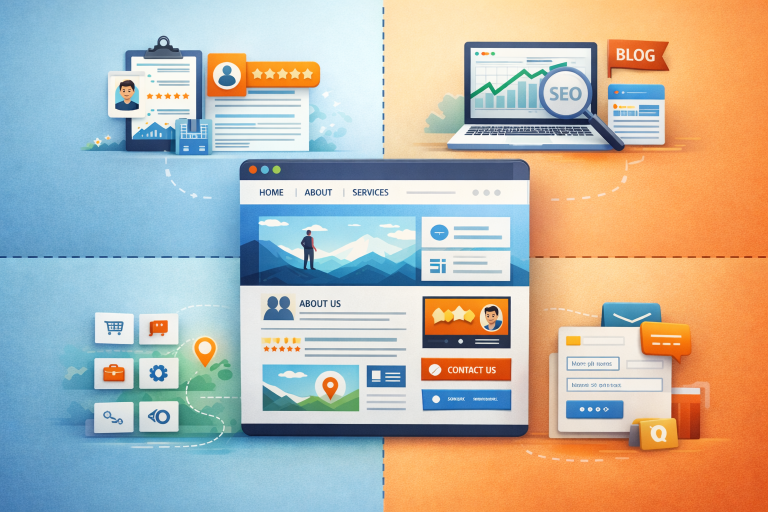
A website is your long-term foundation. You need a website when your goal is to:
- Establish Authority: Show off your portfolio, client testimonials, and company history.
- Boost SEO: Use a blog and multiple pages to rank for various keywords on Google.
- Facilitate Exploration: Let customers browse different services or products at their own pace.
- Provide Support: Host FAQs, contact forms, and “About Us” pages to answer common questions.
When to Use a Landing Page
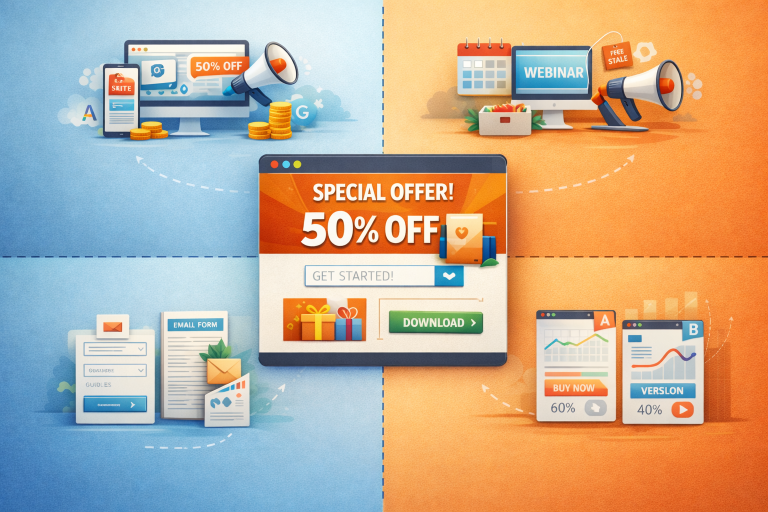
A landing page is your tactical strike team. You should use one when you are:
- Running Paid Ads: If you’re paying for clicks (Google Ads or Meta Ads), sending traffic to a general homepage is a waste of money. A landing page ensures the content matches the ad exactly.
- Launching a Specific Offer: Promoting a limited-time discount, a new webinar, or a free trial.
- Lead Generation: Capturing email addresses in exchange for a “lead magnet” (like a PDF guide or whitepaper).
- A/B Testing: Easily testing two different headlines or images to see which one drives more sales.
The Verdict: Do You Need Both?
Yes. Most successful businesses don’t choose between them—they use them together.
Your website sits in the background, building your brand 24/7 and catching organic traffic. Meanwhile, your landing pages sit on the front lines, turning your advertising dollars into actual leads and sales.
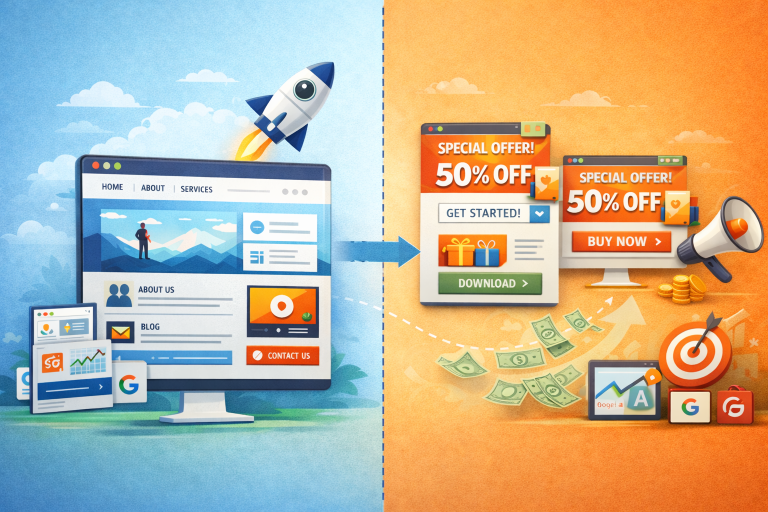
Pro Tip: Never include a top navigation menu on a landing page. If you give people five places to click, they might wander away from the “Buy Now” button. Keep them focused!